




The Lion in Ancient Iranian Culture
11/27/2026
The Lion in Ancient Iran: Symbolism, Kingship, and Power
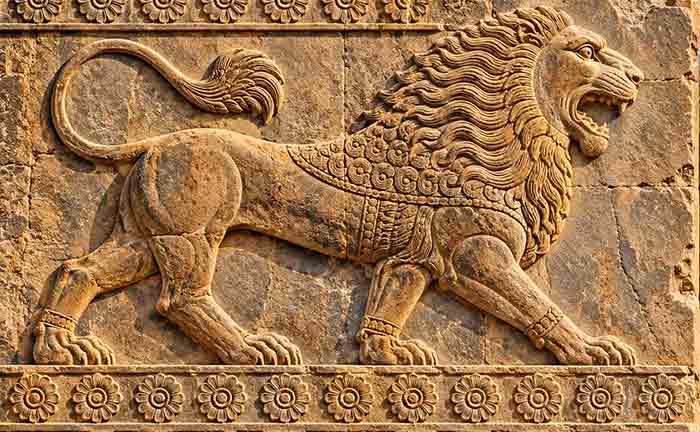
Throughout human history, the lion has been admired as one of nature’s most powerful and majestic creatures. Its strength, commanding presence, and striking appearance have made it a universal symbol of courage, authority, and royalty. Often regarded as the king of beasts, the lion has been closely associated with rulers, warriors, and protective deities across many ancient civilizations.
The magnificent mane of the male lion, with its golden appearance resembling the rays of the sun, has also contributed to its symbolic connection with solar power, warmth, and vitality. In ancient cultures, the lion was therefore more than a powerful animal. It became an image through which people expressed their understanding of strength, kingship, protection, and the natural forces that shaped their world.
In ancient Iran, the lion held a particularly significant place in art, royal imagery, and symbolic traditions. From the monumental reliefs of Persepolis to the luxurious silver objects of the Sasanian period, the lion became one of the most recognizable representations of power and majesty in ancient Iranian art.
The Lion in Ancient Iranian Culture
When we explore the history of the lion in ancient Iran, we encounter much more than an ordinary animal. Its image carries echoes of the natural world, the royal courts of ancient Persia, the monumental architecture of Persepolis, and the artistic imagination of Iranian craftsmen.
In the ancient world, animals were not simply elements of nature. They played important roles in mythology, religion, royal ceremonies, warfare, and artistic expression. Powerful creatures such as lions, bulls, eagles, horses, and boars were often used to communicate ideas that went beyond their physical characteristics.
Among these animals, the lion occupied a special position. Its extraordinary strength, impressive mane, intense gaze, and position as a dominant predator made it a natural symbol of authority and royal power.
In the pre-Islamic Persian empires, particularly during the Achaemenid and Sasanian periods, visual symbols were essential to the representation of kingship. The king was not merely a political ruler; he was also expected to preserve justice, protect the kingdom, maintain order, and ensure the prosperity of his people.
The lion was an especially powerful image for expressing these ideals. Its physical strength represented authority, while its majestic appearance communicated dignity and superiority. In royal art, the lion could embody the ability to overcome danger, defend a kingdom, and establish control over powerful forces.
Yet the symbolism of the lion was not limited to aggression or violence. Its power could also represent protection and stability. In this sense, the lion became an image of strength placed in the service of order.
The Lion as a Symbol of Power and Protection
In ancient civilizations, powerful animals frequently appeared in architectural decoration, royal objects, ceremonial spaces, and personal ornaments. Their presence was often intended to communicate authority and provide a sense of protection.
The lion was particularly suitable for this purpose. Its image could suggest a guardian standing between the protected world and the forces of danger. In ancient Iranian art, lions appear in different forms and artistic contexts. They can be seen in monumental stone reliefs, decorative objects, seals, and elements associated with royal imagery.The image of a lion was not simply a decorative choice. It carried associations with strength, authority, and the ability to overcome opposing forces. Depending on the context, it could communicate royal power, protection, or a more complex symbolic relationship between nature and the cosmos.
A powerful animal carved into stone could therefore do much more than decorate a palace. It could help define the identity and authority of the place itself.
The Lion Between Nature, Politics, and Ancient Beliefs
The lion in ancient Iran stood at the intersection of three important worlds: nature, political authority, and religious or cosmic beliefs.
In nature, it was a formidable predator. In royal imagery, it represented strength, victory, and the authority of the king. In broader symbolic traditions, it could also be associated with celestial power, protection, and the forces that maintained the balance of the universe. These different meanings were not necessarily separate from one another.
In ancient royal traditions, hunting was often more than a recreational activity. It could serve as a public demonstration of a ruler's courage, physical ability, and capacity to overcome dangerous forces.
A king who confronted powerful wild animals demonstrated his ability to control forces that ordinary people feared. Symbolically, this could be understood as a reflection of his responsibility to protect the kingdom against enemies, disorder, and threats.
The lion therefore became both a formidable opponent and a powerful symbol through which royal authority could be expressed.
This relationship between the king and the lion became particularly visible in the art of the Sasanian Empire.
The Lion and Royal Power in the Sasanian Empire
During the Sasanian period (224–651 CE), royal hunting scenes became an important feature of Iranian luxury art.
Sasanian kings were frequently represented hunting powerful animals such as lions, boars, and gazelles. These scenes appeared on magnificent silver and gilded plates produced in royal workshops.
Such objects were not ordinary household decorations. They were prestigious works of art, often presented as diplomatic gifts to important individuals and foreign courts.
The image of the king hunting a powerful animal communicated courage, superiority, and royal authority. It presented the ruler as someone capable of overcoming the forces of the natural world and maintaining order within his empire.
The lion was particularly meaningful in this context because of its association with strength and royal prestige.
Sasanian silverwork reveals how ancient Iranian artists transformed the image of the lion and other powerful animals into sophisticated works of art. Through detailed engraving, relief work, gilding, and carefully balanced compositions, they created images that combined artistic beauty with political meaning.
These works also demonstrate the remarkable technical abilities of Iranian metalworkers and the importance of animal imagery in Sasanian visual culture.
The King as Guardian of Order
In ancient Iranian royal ideology, kingship was closely connected with concepts such as justice, truth, prosperity, victory, and divine favor. The ruler was expected to protect the kingdom, defend its borders, maintain social order, and preserve the well-being of the land.
These ideals were closely related to the ancient Iranian concept of Asha, meaning truth, righteousness, and cosmic order, as well as the idea of Khvarenah or royal glory. The lion offered a powerful visual expression of some of these ideals. Just as a lion protects its territory and commands respect through its strength, the king was expected to defend his kingdom against external threats and internal disorder.
However, strength alone was not enough. An ideal ruler was also expected to exercise wisdom and justice. Power had to serve the stability and prosperity of the kingdom rather than become a source of destruction.
In this symbolic world, the lion represented more than physical force. It could express the idea of strength under control: power used to defend, protect, and preserve order.
The Lion as an Image of Majesty and Royal Prestige
One reason the lion became so popular in royal cultures was its extraordinary visual presence.
The male lion's golden mane resembles a natural crown, while its muscular body, confident posture, and commanding gaze create an unmistakable impression of majesty. In ancient visual culture, these characteristics were especially valuable. Images were an important way of communicating ideas, and powerful animal figures could express authority without the need for written explanations.
A lion carved into a palace wall, engraved on a royal seal, or depicted on a precious metal vessel immediately conveyed a sense of strength and prestige. In this way, the lion became an important element of the visual language of ancient Iranian kingship.
Its image appeared in different artistic forms, from monumental architectural reliefs to smaller decorative objects and royal ornaments. Each representation offered a different interpretation of the same powerful creature. The artists of ancient Iran did not simply reproduce the appearance of an animal. They transformed its natural characteristics into meaningful visual symbols.
The Lion: An Enduring Symbol in Iranian Art and Heritage
The history of the lion in ancient Iran reveals how deeply nature, art, and cultural identity were connected in the ancient world.
From the monumental stone carvings of Persepolis (the ceremonial capital of the Achaemenid Empire) to the finely crafted silver objects of the Sasanian era, the lion remained a powerful image of strength, courage, majesty, and royal authority.
Its significance went beyond its role as a predator. It became a symbol through which ancient Iranian artists and rulers expressed ideas about power, protection, victory, and the relationship between humanity and the natural world. Even today, the lion remains one of the most recognizable and fascinating motifs in Iranian artistic heritage.
Its powerful silhouette, flowing mane, and majestic presence continue to inspire artists and designers. Ancient lion motifs can be reimagined in contemporary graphic design, textile patterns, decorative objects, fashion, and many other creative applications.
At Hilonad, we believe that the artistic heritage of ancient Iran is not simply something to admire in museums and historical monuments. Its remarkable forms and symbols can find new life in modern design.
Discover Our Ancient Iranian Lion Design
Inspired by the strength and majesty of the lion in ancient Iranian art, Hilonad brings this timeless symbol to life through a unique graphic design. Explore our ancient Iranian lion-inspired design, recreated for modern creative projects and available as a high-quality PNG digital download. Discover the Lion Design Here.